Blue Bell Home Inspections Follow the Decade, Not the House
October 1, 2026
October 1, 2026
A home inspector working Whitpain Township on a Tuesday might start the morning in a 1958 cape near Morris Road, checking a galvanized supply line for the telltale sign of a slow leak patched over with fresh drywall. By early afternoon, the same inspector could be standing in a finished basement off Union Meeting Road, tracing a moisture line where a below-grade family room meets an at-grade garage. Neither problem is random. Both are what you'd expect once you know which decade built that stretch of road.
Blue Bell's housing stock spans roughly forty years of continuous construction, and that span matters more to a pre-listing inspection than most sellers assume. The township grew from dairy farms into an executive suburb across the second half of the twentieth century, with waves of corporate relocation following the Route 202 corridor and the growth of Montgomery County Community College's Blue Bell campus. Each wave left behind housing built to the pace of its own market, not to a single, consistent standard. A seller who understands which wave built their block can predict a good share of what shows up on the inspection report before the inspector ever knocks on the door.
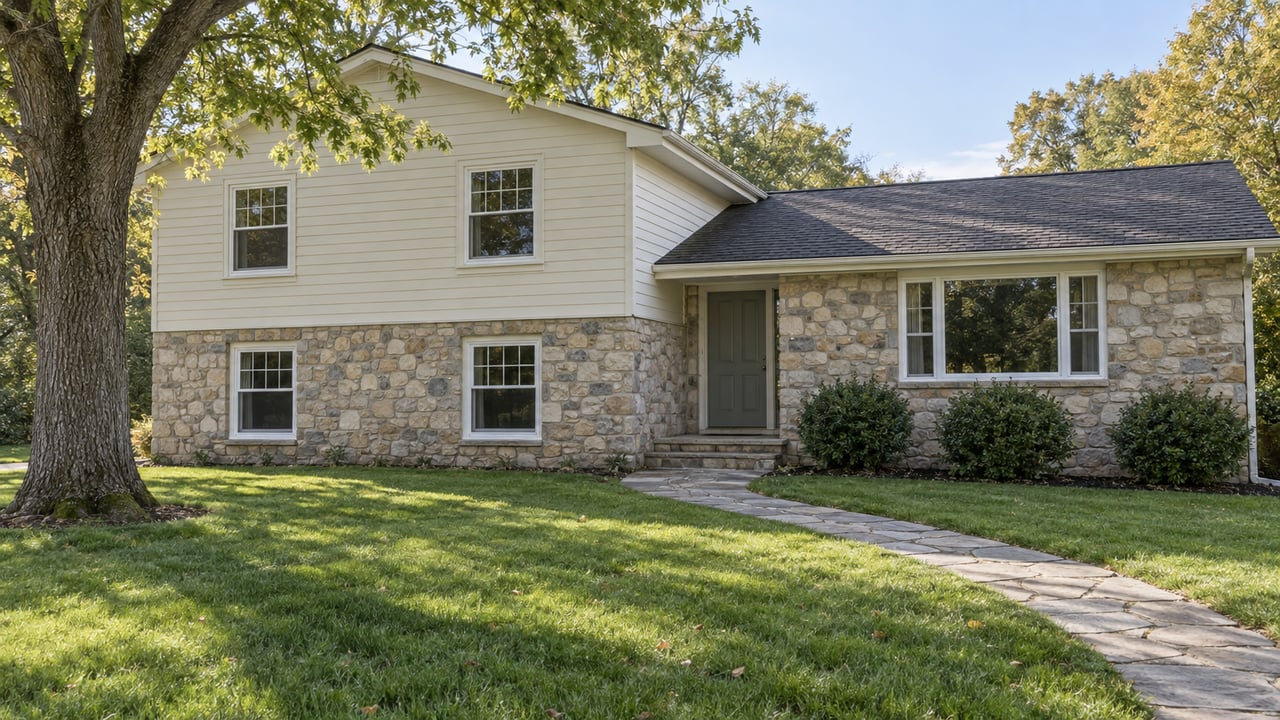
Drive Butler Pike toward Plymouth Meeting and the homes skew older: post-war capes and ranches from the 1950s, built when Blue Bell Country Club anchored one end of a much smaller town. Head instead toward Penllyn and Gwynedd Valley and the lots widen, the colonials get newer, and the additions get more ambitious. Skippack Pike and Union Meeting Road carry traffic through the split-level and center-hall colonial developments that went up steadily from the 1950s through the 1980s, the backbone of what most people picture when they picture Blue Bell.
That range shows up on inspection day as a difference in what gets flagged first. A 1950s cape carries original systems creeping past their design life. A colonial from the 1980s carries builder-grade shortcuts from a market that was moving faster than careful construction allows. Neither is a defect in the sense of something wrong with the seller. Both are simply what forty years of steady growth looks like once an inspector opens the electrical panel or climbs into the crawlspace.
Homes from the 1950s and 60s near Morris Road and the older stretches of Whitpain were built before galvanized pipe fell out of favor, and that plumbing has now outlived its practical service life in a meaningful number of these houses. The failure pattern an inspector looks for isn't a burst pipe. It's the smaller signal: a bathroom fed by an original galvanized line, with a patch of fresh drywall nearby where a slow leak was addressed but the underlying pipe was not. Original electrical panels, aging original ductwork, and settlement where later additions meet the original footprint show up in the same category. None of it is disqualifying. All of it is worth finding and pricing before a buyer's inspector finds it first.
The center-hall colonials and splits that filled in through the 1970s and 80s were built during the fastest stretch of Whitpain's growth, when the office parks along Route 202 and the expanding community college campus were pulling corporate relocation through the township year after year. Solid construction, generally, but built to the pace of a hot market rather than a single careful standard. On these homes, the pattern to watch for is builder-grade material choices reaching the end of their expected life at the same time, plus settlement where an owner's addition ties into the original structure. A roof, an HVAC system, and a water heater installed in the same building boom tend to need replacement in the same decade too, which is worth planning for financially even when nothing is currently broken.
The Wissahickon Creek's headwaters trace through the northern part of Whitpain, feeding wooded, low-lying parcels that turn up again and again in local drainage patterns. Split-level and bi-level homes from this era often built below-grade family rooms and garages, and that layout creates a moisture challenge a standard walkthrough can miss. The specific things worth checking before a buyer's inspector checks them: water intrusion at the point where below-grade and above-grade construction meet, efflorescence on foundation walls, and settlement where an addition joins the original structure. A finished basement near a tributary of the Wissahickon can look perfect and still be sitting on a moisture problem that only shows up during the wrong week of rain.
None of this is optional information. Pennsylvania's Seller's Property Disclosure Statement requires sellers to report known defects, system conditions, and environmental issues, and any unpermitted work, open permits, or zoning violations must be disclosed as well. Blue Bell itself has no separate borough government to check with. It's an unincorporated community inside Whitpain Township, and any permit history or zoning question runs through the township's code enforcement office rather than a village hall.
The practical version of this rule is simple. If a previous owner finished that below-grade family room without pulling a permit, or if an addition off the back of a 1980s colonial was never signed off, that fact needs to surface during disclosure, not during the buyer's inspection. Surfacing it early is a scheduling advantage, not just a legal one.
Montgomery County sits in EPA Radon Zone 1, the classification the agency uses for areas where predicted indoor screening levels average above 4 picocuries per liter. That designation is about geology, not about any individual house, and it applies broadly across the county's Precambrian metamorphic bedrock. What's notable for Blue Bell specifically is that no homeowner-submitted radon test results exist yet for the community itself, so the county average currently stands in as the closest available benchmark. That gap cuts against assumption in either direction. A seller can't point to the zone designation and assume a problem, and can't point to the absence of local data and assume there isn't one. Testing is still the only way to know.
If a test does come back elevated, sub-slab depressurization systems for a typical basement generally run in the $1,000 to $1,500 range, with more complex foundations or crawl spaces pushing the total closer to $2,000. Handling that before listing, rather than negotiating it after an accepted offer, keeps a known cost from becoming a renegotiation point.
As of September 2026, homes in Blue Bell were spending a median of 32 days on the market before going under contract, an 8 percent decrease from the same month a year earlier. That's a market moving fast enough that a surprise mid-contract, whether it's a galvanized line, an unpermitted basement, or a radon result nobody tested for in advance, doesn't just cost money. It costs the momentum of a deal that was otherwise moving toward settlement on a normal timeline. A buyer who has already mentally moved in doesn't want to reopen negotiations over something the seller could have found first.
For a 1950s or 60s cape near the older sections of the township:
For a 1970s or 80s colonial from the township's fastest growth years:
For split-levels and bi-levels near the Wissahickon's tributaries:
A seller who runs this list before listing isn't avoiding the inspection. They're making sure it confirms what they already know instead of introducing something new at the worst possible moment in the timeline.
If you're weighing when to list a Blue Bell home and want a pre-listing walkthrough built around your home's specific decade, Holly Reynolds can help you get ahead of what the inspection will find before a buyer ever sees the report.
Stay up to date on the latest real estate trends.
Transform your home journey into a memorable experience with our innovative, client-focused approach. I combine deep market insights with a genuine passion for service, ensuring that every step—from the initial consultation to closing—reflects my commitment to excellence. See the difference that makes me stand out in today’s competitive market.