
The Wyndmoor Lab Behind Your Thanksgiving Mashed Potatoes
November 26, 2026
"Many of you likely drive by it every week." The Chestnut Hill Local opened a 2016 profile of the U.S. Department of Agriculture's Eastern Regional Research Center with that line. It was describing the plain rectangular building east of Mermaid Lane, between Stenton and Cheltenham avenues, which the paper said a passerby might mistake for a mid-19th-century high school.
If there is a bowl of instant mashed potatoes on a table near you today, it came out of that building. The process for dehydrated potato flakes was developed there in the 1950s. Its story starts with a racehorse and an estate farm, and it is still going.
The ground under the research center was the Winoga Stock Farm. Edward Stotesbury owned it as a horse farm and named it for his favorite mare. In 1918 he sold the horses and turned the land over to food production for Whitemarsh Hall, the mansion where the Stotesbury family lived.
Stotesbury died in 1938. According to the Chestnut Hill Local, his widow, Eva, and her son sold the land to the federal government. That same year, the Agricultural Adjustment Act of 1938 required four regional agricultural research centers around the country. Wyndmoor got the eastern one. Construction finished in 1940 and research began that year.
The first director, Francis Wells, ran the center from 1939 to 1979. He was in his early 30s when he took the job, much younger than the directors of the other three centers, and the Local reports he earned his chemistry doctorate six months after he started. In the span of a single career, the farm that grew food for one family became a lab working on food for the whole country.
The potato work started in the summer of 1953, according to the American Chemical Society, which designated the center's food dehydration research a National Historic Chemical Landmark. The first team was laboratory chief Roderick K. Eskew and chemical engineers James Cording and Miles J. Willard. John Sullivan joined them in 1954.
The problem was texture. Dried potatoes tend to come back gluey. Cording and Willard's work on rapid drying led to a single-drum drying method. A cooking step that became known as the "Philadelphia cook" kept the potato cells intact, so the rehydrated flakes came back closer to real mashed potatoes than earlier dried versions.
The process moved quickly into industry. The ACS reports that instant flakes went into commercial production in 1957. By 1960, six processors were turning more than four million bushels of potatoes into flakes, three years after the first commercial batch. The Wyndmoor researchers kept refining the process until the mid-1970s. They also developed explosion puffing, a method for drying fruits and vegetables that produced puffed carrots and blueberries for the market. The ACS dedicated the landmark on April 18, 2007.
Potato flakes are the best-known result, but the center's own history page lists several others that reach most households. These include lactose-reduction work connected to Lact-Aid, a low-fat mozzarella developed for school-lunch pizza, irradiation methods that control foodborne pathogens, and QuEChERS. USDA's AgResearch magazine explained in 2015 that the name stands for "quick, easy, cheap, effective, rugged, and safe," and that the method makes it easier and cheaper for chemists to check fruits and vegetables for pesticide residues.
Every item on that list is a practical problem in food handling, storage or safety, and it continues the work the Winoga farm started when it switched to growing food for Whitemarsh Hall. Today the campus covers 27 acres with research laboratories, pilot plants, a computer unit and a library. The Agricultural Research Service still lists the Eastern Regional Research Center and four research units at its Wyndmoor location.
The newest chapter comes from Washington. USDA is reorganizing its Research, Education and Economics mission area, and as part of that the Agricultural Research Service plans to decommission the Beltsville Agricultural Research Center in Maryland and move its research projects elsewhere. On its reorganization page, USDA lists Wyndmoor, PA among 27 ARS locations slated to receive Beltsville research projects. USDA has not yet decided where each of those projects will finally go.
In October, a federal court in California temporarily halted the office closures and employee relocations that were challenged in a lawsuit against USDA, and the order is on the public record. On Thanksgiving Day, then, Wyndmoor is on USDA's list to receive more research work, and that list is not final. Under the current plan, the Mermaid Lane lab would take on new work.
The campus is not open for casual visits. USDA's visitor directions say guests get a pass at reception and need identification and a license plate number. Two township parks on the same road are open to everyone, and each has its own history as farm or garden land.
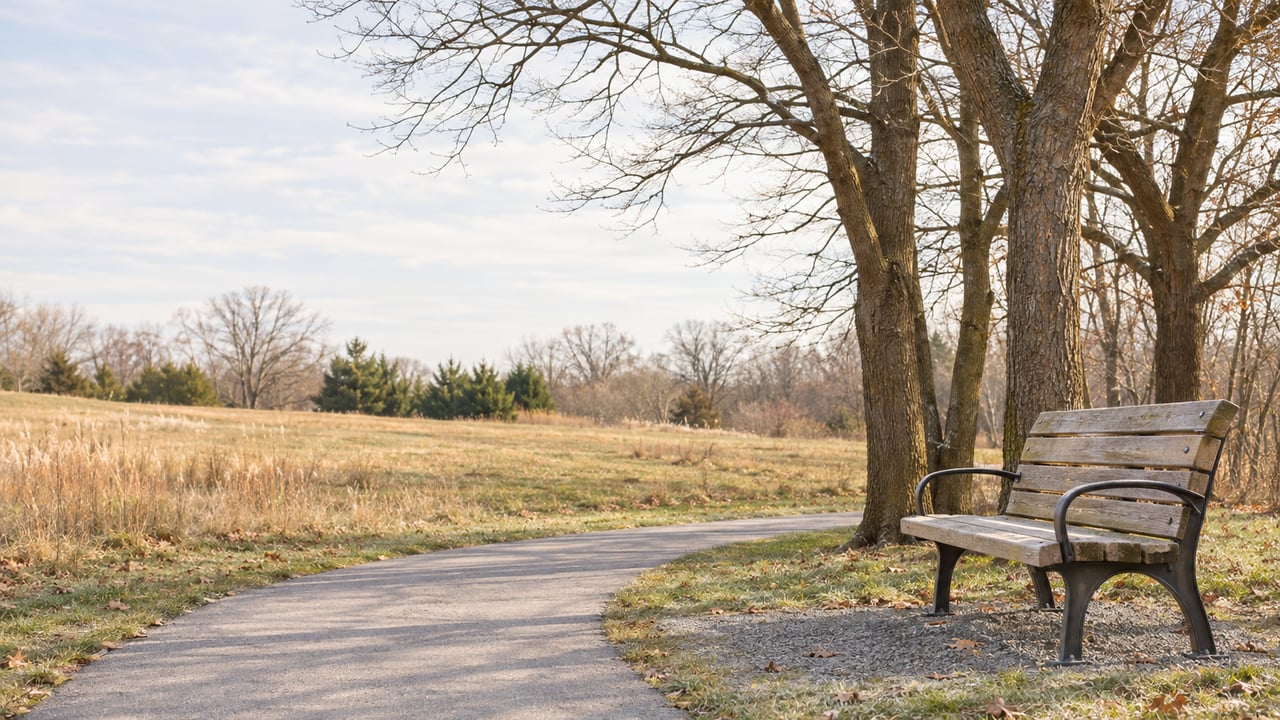
Mermaid Park, at 800 Mermaid Lane where it meets Elm Street, is a 7-acre passive park built around a pond. Springfield Township says the federal Department of the Interior donated the land to the township in 1974. An October 2022 rehabilitation dredged the pond, stabilized the streambanks, added a paved walking path and planted a meadow along the edges. In July 2026, the Morris Arboretum Urban Forestry team mapped and tagged about 200 trees in the park and built an interactive GIS map with details on each one. You can bring it up on your phone and identify trees as you walk the path.
A little farther along, Laurel Beech Park at 1313 Mermaid Lane sits on the former Robertson Greenhouses site. That makes it a second plot on this road where things were once grown. The township bought the 6.5 acres with a Montgomery County Open Space Preservation Program grant on December 3, 1999, and the park now has open space, multi-use fields and a neighborhood playground. Springfield Girls Lacrosse Club and Springfield Soccer Club use the fields in fall and spring. The Springfield Township Recreation Center, at 1200 E. Willow Grove Avenue on the former Seven Dolors Parish property, backs onto the park. It has a gym with a stage, and the former church building is used for summer camps and event rentals.
If you're coming by train, USDA puts the research center about five blocks northeast of Wyndmoor Station. That makes a Thanksgiving-weekend loop easy for visiting family who arrive on the Chestnut Hill East line. Walk past the lab where the flakes were invented, go around the pond at Mermaid Park, and finish at the Laurel Beech fields. If they want lunch afterward, our guide to the businesses along Wyndmoor's Willow Grove Avenue covers the blocks nearby. For more on the area, the Wyndmoor neighborhood page has a broader overview.
If you live along Mermaid Lane, near the lab or one of the two parks, and wonder what your own home on this stretch of Wyndmoor is worth today, Holly Reynolds would be glad to help. Request Your Free Home Valuation. Happy Thanksgiving from our family to yours.
Stay up to date on the latest real estate trends.

Transform your home journey into a memorable experience with our innovative, client-focused approach. I combine deep market insights with a genuine passion for service, ensuring that every step—from the initial consultation to closing—reflects my commitment to excellence. See the difference that makes me stand out in today’s competitive market.