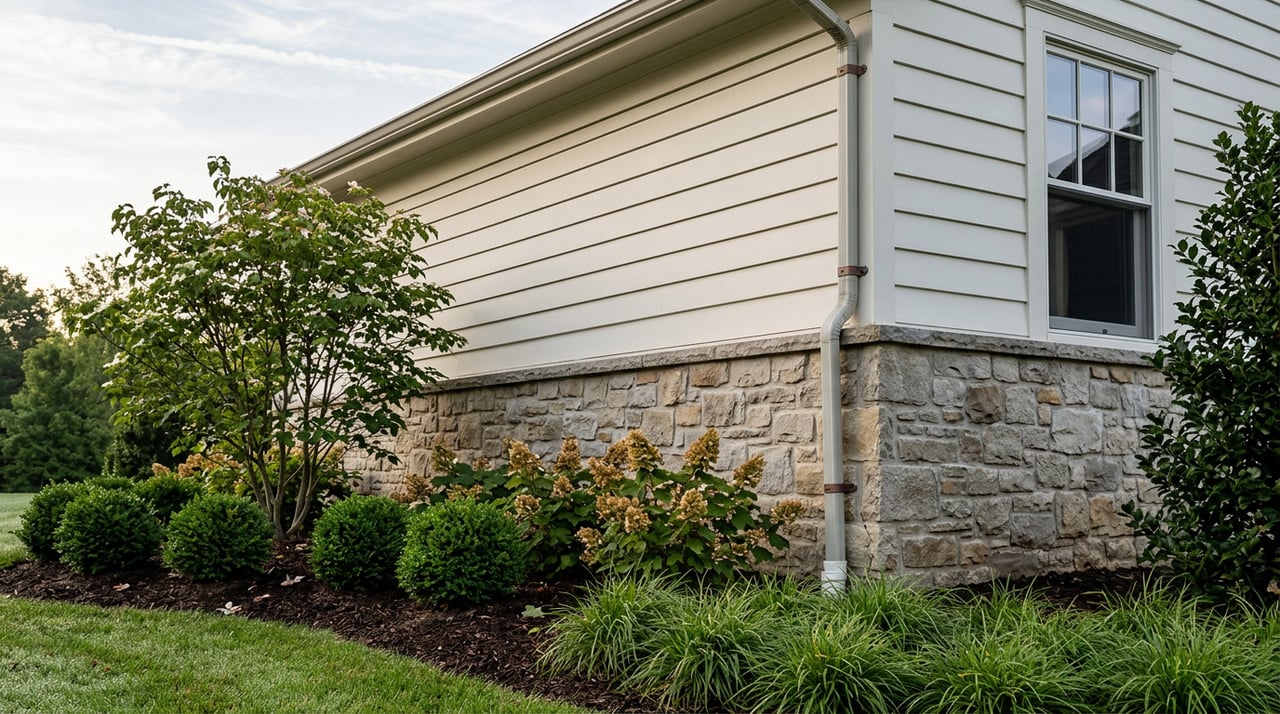
What Slows Down a Main Line Closing Is Rarely the House Itself
September 3, 2026
September 3, 2026
Every Main Line buyer walks into inspection day braced for the same things: the roof, the knob-and-tube wiring, whether the stone foundation is holding water somewhere it shouldn't. Those items get flagged, priced, and negotiated in the open, the way inspections are supposed to work. What actually stalls a Main Line closing tends to live somewhere else entirely: in a hole in the backyard nobody dug on purpose, in a township board that meets once a month, and in the ground the house sits on. None of these show up on a standard walkthrough. All three cluster in the same houses, for the same reason, and almost nobody checks for them together.
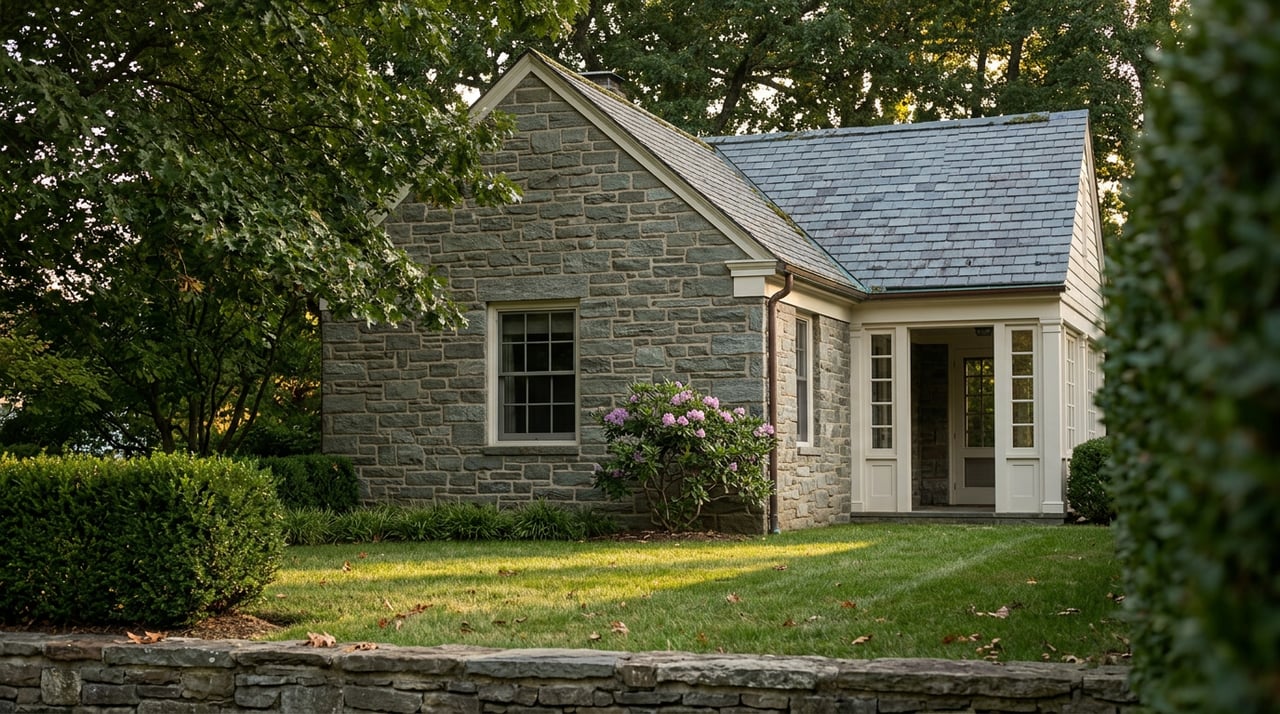
Walk from Overbrook to Malvern and the pattern repeats: gray fieldstone, slate roofs, gabled Tudors, center-hall colonials built up over a century and a half. That range is exactly what makes the Main Line rewarding to own, and exactly why a single inspection report can't cover everything that matters. A licensed Main Line inspector treats knob-and-tube wiring, stone foundation moisture, steam heat, and oil-to-gas conversions as routine parts of the job, not rare finds, because so much of the housing stock predates natural gas as the default fuel.
That last item, the oil-to-gas conversion, is where the first hidden friction point starts. Before natural gas became the dominant heating fuel in this region, homes commonly ran on fuel oil stored in a buried steel tank, with homes built before 1980 along the Northeast carrying a meaningfully higher chance of having one. When homeowners converted to gas, the tank was frequently just disconnected and left in the ground, with no permit, no soil sampling, and no notification to the state. Decades later, that tank is still there. Nobody who has owned the house for the last twenty years may even know it exists.
Pennsylvania's Real Estate Seller Disclosure Law requires sellers to state whether they know of an underground tank on the property. The standard form used statewide asks it directly. But a "no" or "unknown" answer on that form is not the same thing as a clean lot. If a seller genuinely never lived through the oil-to-gas conversion, or bought the house from an estate, they may have no idea what's buried in the yard, and the law doesn't require them to guess.
That's the gap a buyer has to close on their own. A magnetometry tank sweep, which detects buried steel without digging, typically runs $250 to $500 for a standard residential lot. It's cheap insurance relative to what happens if a tank has leaked. Soil and groundwater contamination from a corroded tank can push remediation costs into the $15,000 to $75,000 range, and a lender may not close on a property with a known unresolved tank at all. Pennsylvania does maintain a reimbursement fund, the Underground Storage Tank Indemnification Fund, but eligibility depends on documented compliance, meaning the tank has to have been registered and maintained properly in the first place, which many pre-1970 residential tanks never were.
The practical question in a negotiation isn't whether a tank might exist. On a pre-1980 oil-heated Main Line property with no removal paperwork, assume it might, and treat a property built before 1970 with zero documentation as reason to commission a sweep before your strongest offer, not after. The question is who pays for it, and when.
The second friction point has nothing to do with what's under the yard and everything to do with what's on the facade. Lower Merion Township has designated multiple local historic districts over the decades, including the Harriton Historic District, each regulated by its Historical Architectural Review Board. If a property sits inside one of these boundaries, exterior work, from a new roofline to replacement windows, generally requires a Certificate of Appropriateness before the township will issue a building permit. The board can weigh in on materials, window styles, and rooflines, not just whether the demolition itself is allowed.
This rarely kills a sale outright. It changes the math on timeline and scope. A buyer who plans to add a pool, expand a footprint, or update a facade on a property inside a historic district needs to know that before waiving contingencies, because the review process adds a step that a non-historic property simply doesn't have. Lower Merion also caps impervious surface coverage, the percentage of a lot that water can't soak through, which affects how much driveway, patio, or pool a given lot can support regardless of historic status. Both rules are checkable before an offer goes in. Almost nobody checks them before the offer goes in.
The third friction point isn't about the house or the township. It's geological. Montgomery and Delaware counties fall within the EPA's Zone 1 classification, the highest radon potential category, and Pennsylvania's statewide average indoor radon level runs around 9.63 picocuries per liter, well above the EPA's action threshold of 4 pCi/L. Unlike the tank or the historic district issue, this one isn't specific to a handful of properties. It's close to universal across the region, old house or new.
Mitigation is not expensive relative to the other two issues. A standard sub-slab depressurization system typically costs $800 to $2,500, and properly installed systems reduce radon levels by up to 99 percent. The friction here isn't cost. It's that buyers still treat a radon result as a surprise instead of a line item they should have budgeted for from the start.
| Friction point | What triggers it | Typical cost range | Who usually resolves it |
|---|---|---|---|
| Undocumented oil tank | Pre-1970 home with a history of oil heat | $250 to $500 for a sweep; $15,000 to $75,000 if remediation is needed | Negotiated between buyer and seller, often before the strongest offer |
| Historic district review | Property inside one of Lower Merion's designated local historic districts | Certificate of Appropriateness process adds time, not a fixed dollar cost | Township HARB, before a building permit is issued |
| Radon | Property located in Montgomery or Delaware County, both EPA Zone 1 | $800 to $2,500 for mitigation | Typically the buyer, post-inspection, sometimes split in negotiation |
None of these three problems is caused by the other two. But they're not independent either. The same subset of Main Line houses, the ones old enough to have been built or converted before 1970, sitting inside townships old enough to have designated historic districts decades ago, sitting on the same regional geology, tends to carry all three risks at once. A buyer who finds one should expect to check for the others, rather than treating each discovery as its own isolated surprise.
A few checks are worth doing up front, before an offer becomes binding:
Does every Main Line home have a buried oil tank? No, but pre-1970 homes with any history of oil heat carry meaningfully higher odds, and the absence of documentation doesn't rule it out.
Can I still renovate a home inside a historic district? Generally yes. The Certificate of Appropriateness process regulates materials and design, it doesn't prohibit updates outright, but it does add a review step that affects your timeline.
Is radon mitigation something I handle before or after closing? It's typically addressed during the inspection contingency period, with the cost and responsibility negotiated between buyer and seller like any other inspection item.
Buying or selling a stone Main Line property means dealing with a housing stock that carries real history, and real friction points that a standard inspection checklist won't surface on its own. Holly Reynolds works these details into every Main Line transaction from the first walkthrough, not the week before closing. If you're weighing a move on the Main Line, request your free home valuation and start the conversation with someone who already knows what to check for.
Stay up to date on the latest real estate trends.

Transform your home journey into a memorable experience with our innovative, client-focused approach. I combine deep market insights with a genuine passion for service, ensuring that every step—from the initial consultation to closing—reflects my commitment to excellence. See the difference that makes me stand out in today’s competitive market.